Venice, 2006
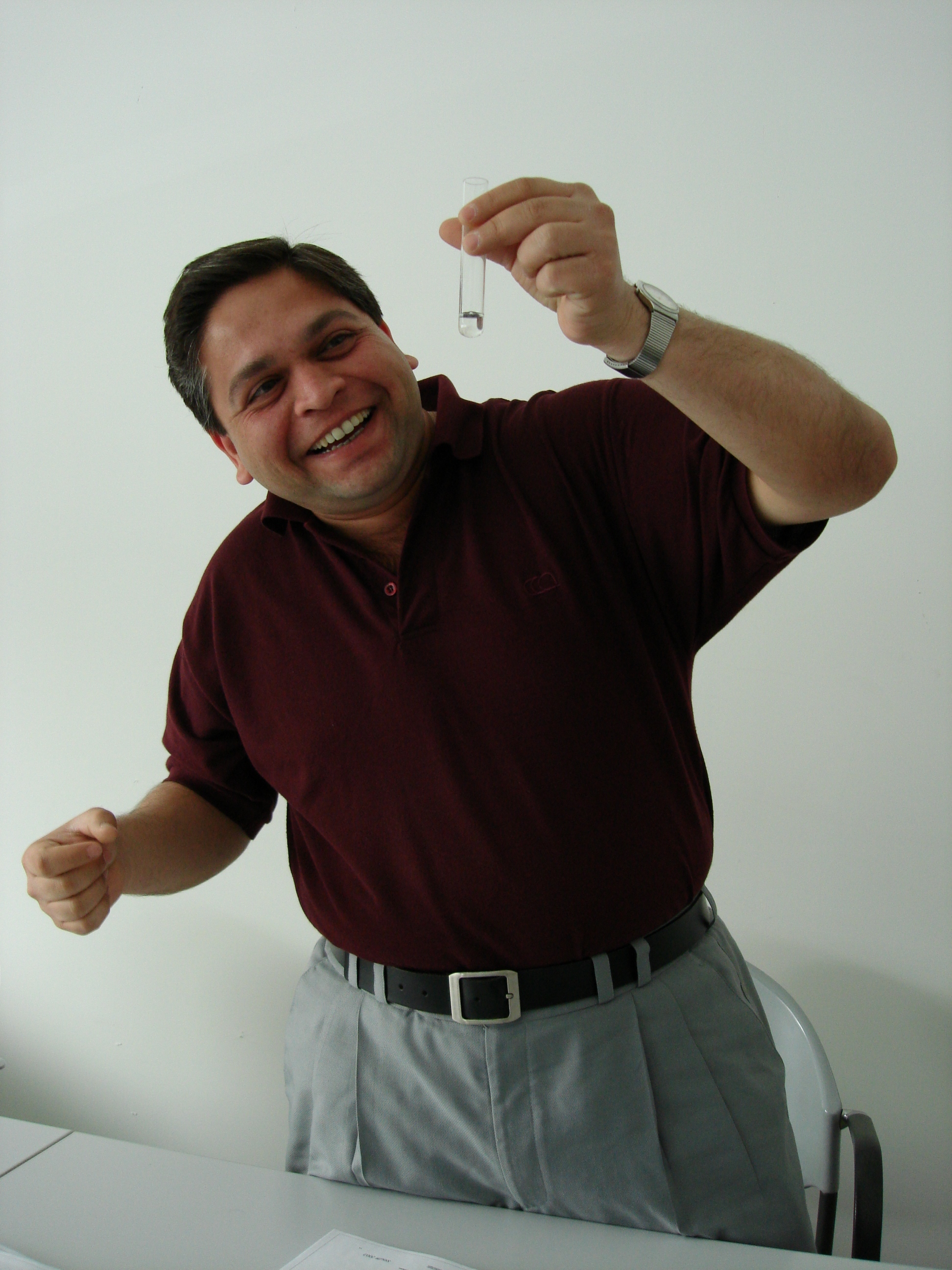
I was studying Nanotechnology in Venice. The city itself felt like the right place for that kind of study — ancient, beautiful, built on a foundation that should not work but does. It was there, in a classroom debate with one of my professors, that the idea that would become the THATTE stack first took shape.

The argument I made was simple, almost too simple. Benzene is a hexagonal ring of carbon atoms, each with a hydrogen hanging off it. If you could somehow polymerize benzene — link the rings together into a continuous lattice — and then strip away those hydrogen atoms, rolling the resulting graphene sheet into a cylinder, you would have the perfect single-walled carbon nanotube. Pure carbon. Hexagonal symmetry. Ballistic conductance. And you would have made it from one of the most abundant organic molecules in existence.
My professor was skeptical. The chemistry did not obviously work that way. The debate ended, as classroom debates do, without resolution. But I kept the thought.
I also kept a larger thought: if you could build a reliable three-state switch from a carbon nanotube — positive current, zero, negative current — you would have the physical foundation for balanced ternary computing. Not binary with a patch. Not multi-level cells approximating analog. True signed ternary, where the physics and the mathematics are the same thing.
That was 2006. The THATTE stack was filed in April 2026. Twenty years elapsed in between.
What Twenty Years Looks Like
It did not look like twenty years of steady work. It looked like an idea that sat in the back of the mind while life happened in the front. I worked. I read. I thought. Every few years the nanotechnology field would publish something that moved the idea forward in my head — a new CNFET result from IBM, a chirality-selective synthesis paper, a theoretical treatment of inter-wall coupling in DWCNTs — and I would pick the idea back up, examine it, and put it back down.
The problem was tools. Not conceptual tools — the physics was clear enough in principle. The problem was computational tools. To actually verify that the device does what I claimed it would do, you need non-equilibrium Green’s function simulation (NEGF), many-body perturbation theory (GW+BSE), density functional theory with phonons (DFPT). These are not calculations you run on a laptop. And without an institutional affiliation, without access to an HPC cluster, without a research group, I had no way to run them.
So the idea kept waiting.
What Changed in 2025
In 2025 I bought a computer. It cost me a solid ₹20 lakhs, which is not a small number for an individual investor working from home in Nashik. It has an AMD EPYC server processor with 32 cores, 251 GB of RAM, and — the part that mattered most — two AMD Radeon Pro W7900 GPUs with 48 GB of video memory each. A total of 96 GB of GPU memory, sitting in a workstation at my desk.
That machine changed everything.
Suddenly, the simulations that had been inaccessible were not just accessible — they were fast. NEGF quantum transport on the DWCNT device ran overnight. GW+BSE optical absorption ran in hours. LAMMPS molecular dynamics for the fabrication simulation runs continuously. The computational barrier that had kept this idea in my head for two decades dissolved into electricity bills and cooling noise.
Around the same time, I subscribed to Claude — Anthropic’s AI assistant, available through the API console. This is the second thing that changed the situation fundamentally. Not because AI did the thinking — it did not, and I want to be precise about this — but because it removed the friction from every task that was not thinking. Writing boilerplate simulation scripts. Formatting patent documents. Checking HTML. Debugging build systems. All the menial work that surrounds the actual brain work, but is not the brain work itself.
Before those two tools existed, a solo inventor working from home could not realistically compete with a university research group. Not because the ideas were worse, but because the overhead was crushing. A research group has PhD students who handle the overhead. A solo inventor handles it alone, or does not handle it at all, and the ideas stay in a notebook.
The GPU workstation and the AI assistant leveled that field. Not partially — completely. Sitting at my desk in Nashik, I can now run simulations that would have required cluster time at a national facility, and I can manage the surrounding work without losing days to it. The physics still requires me. Everything else can be delegated.
The Benzene Simulation
I want to be honest about the simulation that did not work, because the ones that eventually do work are more trustworthy when you are also willing to report the failures.
In 2025, after the workstation arrived, one of the first things I did was run a molecular dynamics simulation of the Benzene polymerization idea I had argued for in Venice in 2006. Set up the chemistry, let the ReaxFF force field run, and watch what happens.
What happened was: a lump of carbon balls. Not nanotubes. Not even graphene sheets. Just a disordered clump of carbon that did not know it was supposed to be anything elegant.
I laughed. And I thought: fair enough, professor.
But then I thought more carefully. The simulation disagreed with the idea — but the idea was from 2006, and the technology had progressed enormously since then. The question was not whether the Benzene route worked naively. The question was whether there was a route that did work, and what its conditions were. That question became Thatte7 — the seventh patent, which is pending and covers the fabrication method for achieving the device.
I am not going to describe the solution here. When Thatte7 is published, I will write exactly how it came to me and what the simulation confirmed. What I will say now is this: when the answer appeared, it was so simple that I sat back and laughed again, for a different reason. The most elegant solutions in physics always have that quality. They are simple enough, once seen, that you cannot believe you were looking past them. Simple as burning camphor. The camphor vanishes, the room smells different, and you cannot put it back.
Wait for it.
RAVAN
The compact model I use for device simulation is called RAVAN. The acronym stands for Reconstructed Ambipolar Virtual-source Analytical Nanodevice. I chose to build it from scratch, using Landauer transport theory and Fermi-Dirac statistics, rather than adapt the CNFET model from Stanford — which, excellent as it is, was built for a different device architecture and hides the physics I needed to see.
RAVAN was programmed with assistance from Claude. I designed the physics; the code was built together. But RAVAN, as a name, did not come from the engineering. It came from mythology, and the fit is so exact that I have to record it here.
In the Vedic tradition, Ravan is not simply the villain of the Ramayana. He is something more complex and more interesting. He was an exceptionally learned Brahmin — a scholar of extraordinary depth — and an ardent devotee of Mahadev (Shiva). The story that concerns me here is not the Lanka episode. It is earlier: Ravan, on the instructions of Mahadev himself, reconstructed the Vedas. The Vedas — the foundational texts of Vedic knowledge, the principles on which this entire Kalpa (age of the universe) operates — were reconstituted by Ravan. Every law of this creation, in a sense, passed through his hands.
He became so powerful, so learned, so saturated with knowledge that the Bhagwant (the Divine) had to take the Ram avatar specifically to liberate him. Not to destroy him in the sense of annihilation — but to liberate him from the accumulated weight of that knowledge, that ego, that power. Ram’s purpose was Ravan’s moksha.
Now consider what RAVAN the model does. It reconstructs the device physics from first principles. It does not borrow the Stanford model; it rebuilds the transport equations from the ground up — Landauer, Fermi-Dirac, ballistic conductance, temperature dependence — so that the physics is legible rather than hidden inside a parameterised wrapper. It reconstitutes the foundational equations.
The parallel struck me as soon as I named it, and I have not found a way to improve on it since. RAVAN is exactly right.
I shared this with some old school friends, and their reaction was precisely what I expected: part amusement, part recognition, part the particular discomfort that comes when a name is so apt it feels slightly presumptuous. He he he. Yes. That is exactly the reaction RAVAN deserves.
Nashik, 2026
I filed six complete patent specifications with the Indian Patent Office on 9 April 2026. Six patents covering the entire computing stack, from the quantum physics of two concentric carbon nanotubes to a compiled, running operating system written in a programming language I designed for balanced ternary hardware.
I filed them alone, from Nashik, without an attorney, without a university affiliation, without a research group. The address on every filing is C-101, Acropolis Apartments, Thatte Nagar, Nashik-422005. My home.
This would not have been possible in 2020. It would not have been possible in 2022. The combination of tools that made it possible came together in 2024–25, and the window opened. I walked through it.
I think about the solo inventors who had ideas of similar scope in earlier decades — who had the physics right but lacked access to the computational verification, the document automation, the simulation infrastructure — and had to either abandon the work or spend years finding institutional partners willing to host it. Many of them abandoned it. Many good ideas were lost to overhead.
We are at the beginning of a period when that calculus changes. When a single person with deep domain knowledge and access to modern tools can build, verify, and protect an idea of genuine scope. The institutions are not becoming less relevant — fabrication and experimental validation still require them. But the intellectual work, the simulation, the specification, the filing: these are now tractable for someone working alone, if the tools are right and the idea is clear.
The idea has been clear since Venice, in 2006. The tools arrived in 2025.
Twenty years is a long time to carry something. But I would not have traded the time. Twenty years of turning an idea over, testing it against everything new the field published, refining it through three complete paradigm shifts, watching the physics mature until it was ready to be verified — that process produced a stack that is more coherent than anything I could have filed in 2010. The waiting was not wasted. It was the design process.
If you are patient enough to wait for the Kalpa to be ready, you get to write its foundational equations. Ravan knew this. So did Mahadev, in giving him the instruction.
The camphor is burning. The room will smell different soon.