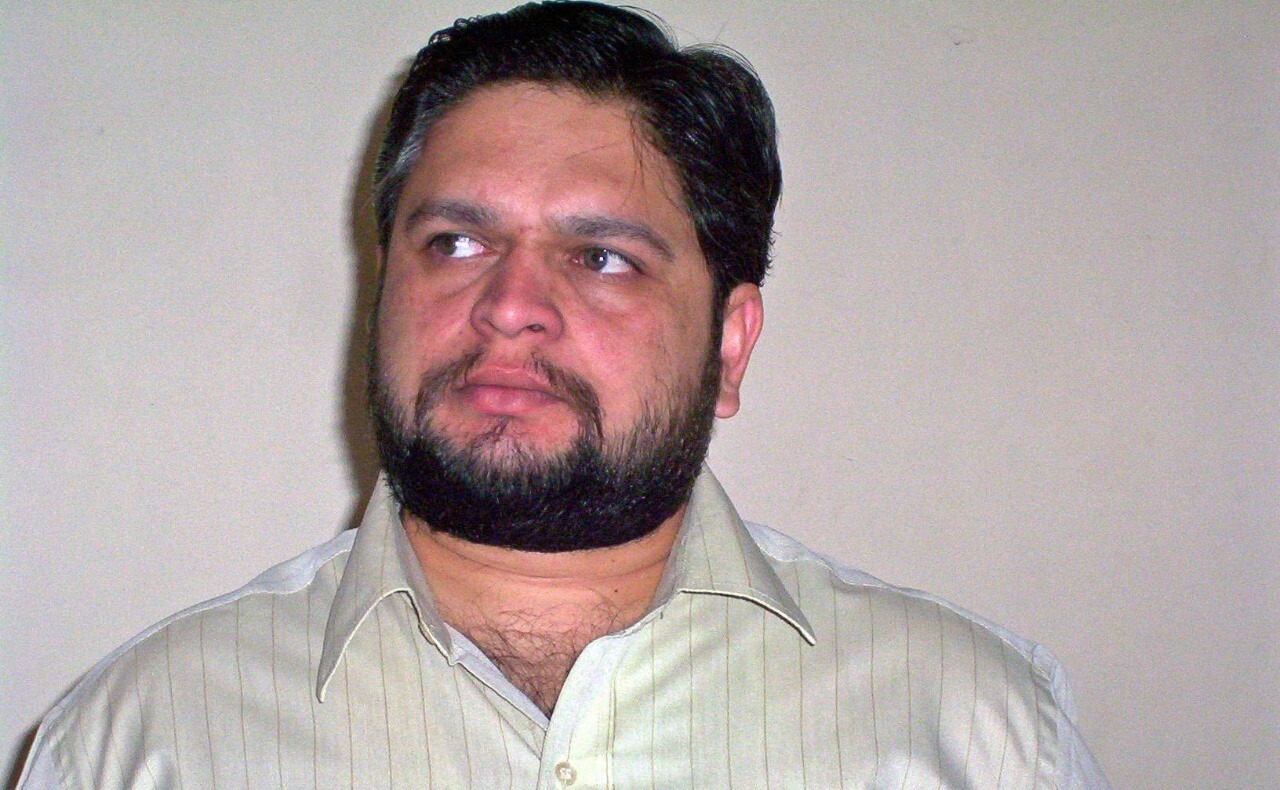
Manish Jagdish Thatte
I am an independent inventor and researcher based in Nashik, Maharashtra, India. My work focuses on alternative computing paradigms — specifically balanced ternary computing — from the transistor level through to operating systems and compilers.
The THATTE project represents twenty years of work on a single question: what would a computer look like if it had been designed from first principles around three logic states, not two?
The 2006 Insight
In 2006, while studying the behaviour of carbon nanotube devices in the literature, I noticed something that seemed obvious in retrospect but had not been systematically pursued: a CNFET can conduct current in either direction with equal symmetry, making it a natural three-state device. Positive current, zero current, negative current — three states, not two.
The implications were immediate: if the device is naturally three-state, build a three-state logic family around it. And if you are building a three-state logic family, balanced ternary is the mathematically optimal encoding. From there, the entire stack unfolds: gates, standard cells, processor, compiler, operating system.
This insight is documented in a notarized affidavit (Exhibit A, attached to Patent P3), establishing the 2006 conception date for the core THATTE device concept. The affidavit was executed before a notary public on 21 March 2026 as part of the patent filing process.
Lab Mission
maniTLab exists to prove that balanced ternary computing is not a historical curiosity or an academic exercise. It is a practical, physically realisable alternative to binary that becomes increasingly attractive as binary scaling approaches its limits.
The mission has three phases:
Establish the Patent Portfolio
Nine patents filed with IPO India, covering the complete hardware-to-software stack. Complete spec by March 2027.
Physical Device Demonstration
Fabricate the THATTE CNFET device and demonstrate three-state switching in the lab. Validate SPICE results experimentally.
Open Licensing & Collaboration
License the technology to semiconductor fabs, EDA vendors, and research institutions. Build the ternary computing ecosystem.
Proof of Work
The THATTE project is unusual in that it does not just describe a system — it delivers working implementations at every layer:
- SPICE simulation: ngspice-44.2 with Stanford CNFET model, all gates verified
- Compiled kernel: THATTE-OS 0.1.0 compiles to
.t3bbinaries with full execution traces - Working compiler: ManiT v0.1.0 compiles all kernel modules successfully
- Encoding table: 128-entry ASCII-to-balanced-ternary table verified
- Patent documents: 9 × FINAL.pdf, 24 technical figures, SPICE output files — 31 filed documents
This level of implementation detail in a patent filing is uncommon. It reflects a deliberate choice: to make the inventions undeniable, not just describable.
Press & Contact
For research collaboration, licensing enquiries, technical questions, or press requests, contact:
"Binary computing succeeded not because it is optimal, but because silicon transistors happened to be easiest to make bistable. Carbon nanotubes do not have this constraint. CNFET devices are naturally three-state. It would be a missed opportunity not to build the computing stack that matches."